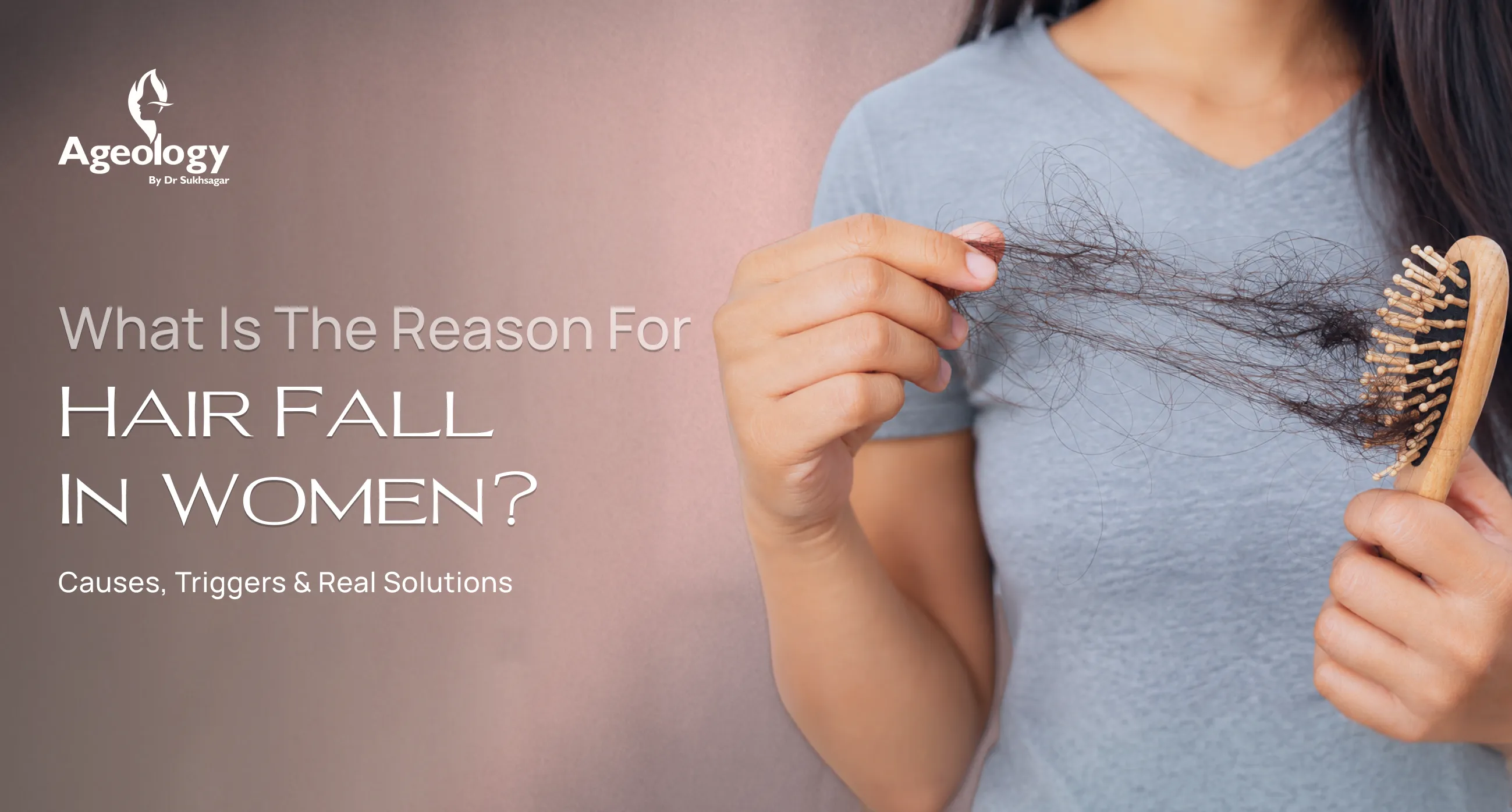
You find a few extra strands on your pillow. Then a few more in the shower drain. It’s unsettling, and understandably so. For context, losing 50 to 100 strands a day is completely normal; that’s just the hair growth cycle doing its thing. But once you notice real thinning, or shedding that’s clearly picked up pace, something else is usually going on underneath.
So what is the reason for hair fall in women, really? Not the version on the back of a shampoo bottle, but the actual biological one. Getting there means moving past generic anti-hair-fall products and looking instead at hormonal balance, nutritional status, and scalp condition. At Ageology, Dr Sukhsagar Ratol and the clinical dermatology team use advanced diagnostics to trace hair loss back to its actual trigger, then build a recovery plan around that.
Understanding Hair Shedding vs Hair Loss
Before diagnosing anything, it helps to separate two things that get lumped together constantly: ordinary shedding (telogen effluvium) and progressive hair loss (androgenetic alopecia). They’re not the same problem, and they don’t respond to the same fixes.
- Telogen effluvium is temporary, spread-out shedding that tends to show up two to three months after some kind of physical, emotional, or physiological jolt to the system.
- Androgenetic alopecia is the female pattern version of hair loss. Gradual thinning along the central parting and crown, driven mostly by a genetic sensitivity to hormones.
- Scalp Microenvironment Issues are things like seborrhoeic dermatitis, persistent dandruff, or fungal infections, all of which wear down the roots over time.
5 Major Reasons Behind Hair Fall in Women
Female hair growth is tied tightly to what’s happening internally, so the reasons behind hair fall in women rarely come down to just one thing. Usually it’s a handful of overlapping categories.
1. Hormonal Imbalances and Life Transitions
Hormones more or less run the hair growth cycle. When oestrogen, progesterone, or thyroid hormones start swinging, follicle stability tends to go with it.
- Polycystic Ovary Syndrome (PCOS): androgen levels climb, follicles miniaturise, and the crown thins out first.
- Postpartum Shift: oestrogen drops sharply after childbirth, and a wave of shedding often follows a few months later.
- Thyroid Dysfunction: whether it’s hypo- or hyperthyroidism, both interfere with root nourishment and lead to diffuse loss.
- Perimenopause & Menopause: oestrogen fades, androgen influence becomes relatively louder, and hair diameter thins gradually over the years.
2. Nutritional Deficiencies and Severe Dieting
Hair follicles are some of the most metabolically demanding tissue in the body. They need a constant, reliable supply of micronutrients to function. Run low on ferritin (stored iron), vitamin D3, B12, zinc, or key amino acids, and the hair matrix simply doesn’t get the nourishment it needs to function well. Follicles then get pushed into a resting phase far earlier than they should.
3. Physical Stress and Medical Illness
Here’s a pattern worth knowing: sudden hair fall in women often has nothing to do with anything happening right now. It’s usually the tail end of stress the body absorbed weeks, sometimes months, earlier. Major surgery, a high fever, chronic illness, or a bad viral infection; any of these can knock a large batch of follicles out of the growth phase at once. You just don’t see the shedding until later.
4. Psychological Stress and Sleep Deprivation
Prolonged mental stress keeps cortisol elevated, and that has real downstream effects. Stress may cause hair fall, scalp blood flow to drop, hormone balance may shift, and active follicles may get pushed into their resting stage before their time.
5. Excessive Heat, Styling, and Chemical Exposure
Daily heat styling, tight hairstyles that put constant tension on the roots (a condition called traction alopecia), and harsh chemical treatments all chip away at the keratin structure of the shaft itself. Over time, that means more breakage and more strain on the follicle.
What Triggers Extreme Hair Fall in Women?
When someone experiences extreme hair fall in women’s cases specifically, it’s almost never one clean cause. More often it’s several things stacked on top of each other: metabolic stress, nutrient depletion nobody caught in time, and low-grade inflammation that may have been running in the background.
If you’re seeing sudden bald patches (alopecia areata), a parting that seems to be widening by the week, or noticeable clumps coming out during a normal wash, don’t wait on that. Get it looked at. Early diagnosis is what protects follicle viability and keeps root miniaturisation from becoming permanent.
When Should You See a Dermatologist for Hair Fall?
Most hair fall starts out as a temporary reaction to some shift in your routine or lifestyle. The harder part is knowing when it’s stopped being temporary, when it’s time to move past home remedies and actually get a professional opinion. Left unchecked, chronic stress on the follicles can lead to permanent miniaturisation, which is exactly why catching things early makes such a difference to how well restoration actually works.
A few signs worth taking seriously enough to book a clinical assessment:
- A parting that’s visibly widening: Your scalp starts showing through under normal lighting in a way it didn’t a few months ago.
- Shedding that comes out in clumps: Not the usual few strands, noticeable handfuls while brushing, washing, or just running your fingers through your hair.
- Round, patchy bald spots: Smooth patches that show up suddenly on the scalp or even the eyebrows.
- A scalp that’s uncomfortable: Persistent itching, burning, redness, or tenderness alongside the shedding is worth flagging on its own.
- Thinning that won’t respond to anything you’ve tried: If three or four months of better diet and over-the-counter products haven’t moved the needle, that’s usually a sign something deeper is driving it.
A dermatologist can do a physical root evaluation and order targeted blood work to actually isolate what’s causing it, which saves you from months of guessing while more density is lost in the meantime.
How Ageology Treats Female Hair Loss
At Ageology in Chandigarh, Dr Sukhsagar Ratol and the team approach female hair loss from several angles at once, all grounded in scientific evidence rather than trends:
- Comprehensive Digital Trichoscopy: Scalp health, hair density per square centimetre, and shaft thickness get mapped out to pinpoint exactly where things stand.
- Growth Factor Concentrate (GFC) & PRP Therapies: Concentrated growth factors, pulled from your own blood, go directly into weak follicles to wake dormant roots and gradually improve hair diameter.
- HydraFacial Keravive Scalp Care: A scalp-specific treatment that cleanses, exfoliates, and hydrates while infusing biomimetic growth factors along the way.
- Hair Meso Therapy: A targeted cocktail of vitamins and amino acids delivered straight to the scalp, giving weakened follicles the nutrient support they need to sustain healthier, fuller growth over time.
- QR 678® Hair Therapy: A non-surgical hair regrowth treatment that utilises a targeted, bio-engineered mix of specific plant-derived growth factors to reactivate dormant hair follicles and curb active hair shedding.
- Hair Nourishment Protocols: Customised internal and topical scalp care plans that combine medical-grade serums, micronutrients, and hydration treatments to strengthen existing hair shafts and protect the skin barrier.
- Scalp Micropigmentation (SMP): A specialised cosmetic tattooing technique that deposits natural pigments into the scalp to simulate hair follicles, instantly adding visual density to areas with sparse growth or a widening partition.
Frequently Asked Questions
How do I stop my hair from falling out as a female?
Start with a proper diagnosis; see a qualified dermatologist rather than guessing. From there, it’s usually a combination: correcting vitamin deficiencies, balancing hormones, being gentler with scalp care day to day, and, where it’s warranted, clinical therapies like GFC or PRP.
What are the top 5 reasons for hair loss?
Hormonal shifts (PCOS, thyroid issues, menopause), significant nutritional deficiencies (iron, vitamin D), chronic stress, genetic predisposition, and aggressive styling or chemical damage, these five cover most cases of hair loss.
Why am I losing all of my hair as a female?
Severe, widespread loss can come from acute telogen effluvium, an autoimmune reaction like alopecia areata, or a major systemic medical event. Either way, you may require an actual evaluation to know which one it is.
How can I regrow hair naturally?
A protein-rich diet, solid vitamin D and iron levels, gentle scalp massage to get blood moving, and cutting back on high-heat styling all help. For anything beyond mild thinning, though, these steps tend to work better alongside clinical follicle stimulation than on their own.
Which vitamin deficiency causes hair loss?
Vitamin D3, B12, iron (ferritin), zinc, and biotin, low levels of any of these are common culprits behind premature shedding and a weaker hair shaft.