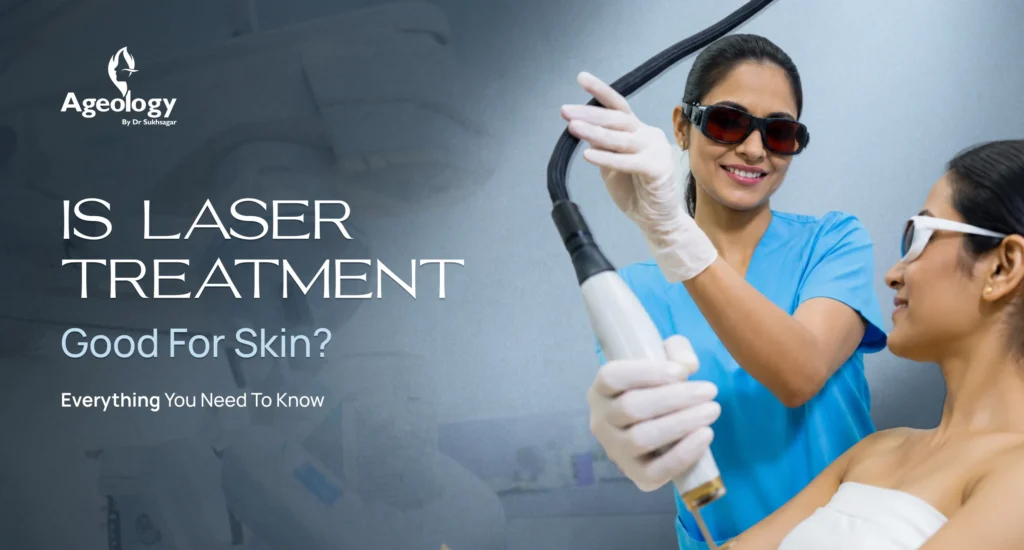
Over the years, clinical dermatology has redefined what it means to restore and rejuvenate skin, and laser technology sits right at the centre of that shift. Where topical creams reach their physical limit and invasive surgeries carry heavy downtime, laser skin treatment sits between the two, offering targeted, non-surgical correction with a level of precision neither of the older options could match.
Even then, one question keeps coming up for anyone considering clinical skincare for the first time: Is laser treatment good for skin, or is it just another trend dressed up in technical language?
The short answer is yes, laser treatment may have great potential benefits for the skin, provided it’s done under expert dermatological guidance. At Ageology, laser therapy for skin is viewed as a sophisticated tool for cellular renewal. By using light energy to trigger the body’s own healing response, advanced lasers can reverse structural damage, fade stubborn pigmentation, and extend how long skin holds onto its vitality.
How Laser Treatments Work: Understanding Selective Photothermolysis
Understanding “What is laser treatment for skin? “And why it works as well as it does starts with a fairly simple biological principle called “selective photothermolysis”.
A specialised laser device sends out focused light at a precise wavelength. That light passes through the surface of the skin and gets absorbed selectively by a specific target, known as a chromophore. This could be melanin (pigment), haemoglobin (red blood vessels), or water sitting within the skin tissue itself.
Once absorbed, that light converts into controlled thermal energy, and this single mechanism accomplishes two things at once.
- Targeted breakdown: It selectively breaks down excess pigment, damaged scar tissue, or unwanted hair follicles, all without touching the healthy skin surrounding them.
- Neocollagenesis (collagen production): The controlled micro-heat wakes up fibroblasts deep in the dermis, setting off a fresh surge of collagen and elastin production that firms, structures, and smooths the skin from within.
5 Major Benefits of Laser Treatment for Your Skin
Tailored properly to your skin type, laser therapy for skin delivers results that standard facials may never match, and the effects tend to hold up over the long run
- Corrects Hyperpigmentation and Sun Damage
Sun exposure, hormonal shifts, and inflammation all tend to leave something behind: dark spots, freckles, or melasma that don’t fade on their own. Targeted Q-switch laser shatters dark melanin clusters into microscopic particles, which the body’s lymphatic system then clears away gradually over time.
- Smooths Fine Lines, Wrinkles, and Texture
Collagen reserves decline naturally as we age. Laser resurfacing creates controlled thermal channels beneath the surface, which essentially forces the body to produce fresh, resilient collagen in response. Over time this plumps out fine lines, tightens mild skin laxity, and refines rough texture.
- Reduces Acne Scars and Textural Impairments
Pitted acne scars, the ice-pick and boxcar types especially, come down to lost structural collagen underneath the surface. Fractional laser resurfacing goes after these localised depressions directly, breaking down rigid scar tissue and letting smoother, more even skin rebuild itself from within.
- Clears Vascular Lesions and Redness
Broadband light and specialised vascular lasers target haemoglobin in broken capillaries, spider veins, and rosacea, collapsing the damaged micro-vessels responsible and restoring a calmer, more even-toned complexion.
- Delivers Long-Lasting Hair Reduction
Shaving and waxing only ever deal with hair at the surface. Laser hair reduction works differently, targeting the melanin inside the hair follicle bulb itself. That thermal energy disables the follicle’s growth mechanism entirely, which is what makes laser skin treatment such a reliable route to safe, convenient, and lasting hair reduction.
Understanding the Types of Skin Lasers
Not every laser works the same way, and the right dermatologist will choose the modality based on your skin tone, your specific concern, and how much recovery time you can realistically give it.
| Laser Category | Primary Mechanism | Best For | Typical Recovery |
| Ablative Lasers (e.g., CO₂, Erbium) | Remove the outermost skin layer while heating deeper tissue. | Deep wrinkles, severe acne scars, pronounced sun damage | 5 to 10 days of peeling/redness |
| Non-Ablative Lasers (e.g., Fractional, Nd:YAG) | Penetrate beneath the surface without removing the top skin layer. | Mild to moderate wrinkles, early pigmentation, subtle skin tightening | Minimal (1 to 3 days of mild pinkness) |
| Q-Switch/Carbon Peels | Deliver rapid, high-intensity energy pulses to target pigment particles. | Melasma, dark spots, enlarged pores, skin brightening | Zero downtime (“lunchtime treatment”) |
| Intense Pulsed Light (IPL) | Use broad-spectrum light rather than a single wavelength. | Diffuse redness, age spots, overall skin tone evening | Virtually zero downtime |
Are There Any Risks or Side Effects?
When experienced dermatologists, like Dr Sukhsagar Ratol and her team at Ageology, handle the session with medical-grade equipment, laser skin treatment is exceptionally safe. That said, because lasers are delivering real thermal energy into living tissue, some temporary side effects can show up.
- Mild redness
- A bit of warmth (not unlike a light sunburn), and
- Slight swelling right after the session
All of these may settle down fairly quickly.
Safety priority: Skin tone plays a real role in how safe a laser session is. Deeper skin tones carry more surface melanin, which means specific wavelength choices and more conservative energy settings are needed to avoid hyperpigmentation.
The Ageology Difference: Clinical Precision and Personalisation
At Ageology, we work from the belief that advanced technology only produces superior results when someone with real medical expertise is guiding it. Under the direction of Dr Sukhsagar Ratol and our team of board-certified dermatologists in Chandigarh, every treatment plan starts with a thorough skin evaluation, not a generic protocol pulled off a shelf.
Rather than aggressive, one-size-fits-all settings, we use tailored laser parameters and combination therapies, often pairing laser treatment with deep hydration or barrier-repair protocols like Hydrafacial, to protect the skin’s microbiome while still maximising cellular renewal.
Book a consultation with Ageology’s dermatology team to determine the ideal laser protocol for your skin profile.
Frequently Asked Questions
Does laser skin treatment really work?Yes, when matched to the right skin concern and performed by a qualified dermatologist like Dr Sukhsagar Ratol and her team at Ageology. Results are backed by decades of clinical evidence, not guesswork.
How long does skin laser treatment last?Results vary by treatment. Pigmentation and texture improvements can last months to years, though ageing and sun exposure eventually call for touch-ups.
Is laser 100% safe?No treatment is entirely risk-free, but laser skin treatment carries a strong safety profile when performed with medical-grade equipment and proper wavelength selection for your skin tone, as done at Ageology.
How many laser sessions for face?Most facial concerns need 4 to 6 sessions, spaced a few weeks apart, though this may often depend on the condition being treated.
What is a good age to start laser?There’s no fixed age. Preventive treatments can begin in the mid-twenties, while corrective ones are typically guided by the specific skin concern rather than age alone.