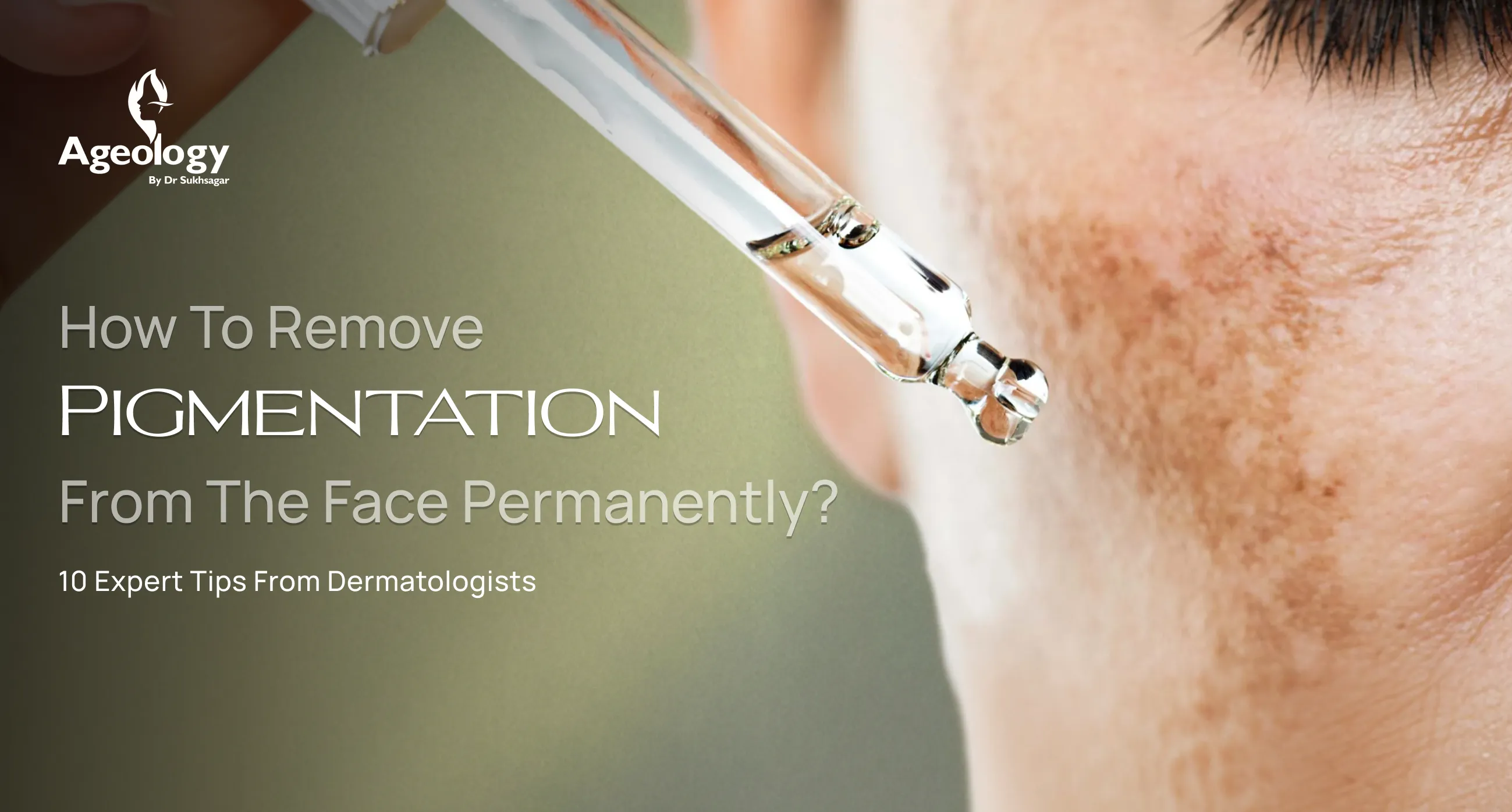
Uneven tone, dark patches, spots that just won’t budge, and pigmentation have a way of making a complexion look older and more tired than it actually is. Whatever triggered it (sun exposure, hormones, or an old breakout), facial hyperpigmentation ranks among the most common skin complaints people bring to a dermatologist’s office, anywhere in the world.
If you’ve spent any time searching for how to remove pigmentation from the face permanently, you already know how deceptively simple it is to fall into a loop of brightening creams, DIY masks, and whatever trend is circulating that week, with results that rarely match the promise. The reality is less exciting but far more effective: lasting skin clarity comes from identifying exactly what’s causing your pigmentation and treating that specific cause with precision, not at random.
At Ageology, under the guidance of Dr Sukhsagar Ratol, a board-certified aesthetic practitioner and expert dermatologist, hyperpigmentation is treated as a biological problem with a biological solution, targeting excess melanin at its actual source. Here are ten dermatologist-backed tips that genuinely move the needle on pigmentation removal, along with what a clinical approach adds on top.
Understanding Facial Pigmentation: Types and Root Causes
Pigmentation shows up when melanocytes (the cells responsible for producing melanin) go into overdrive in response to a trigger, whether that trigger comes from outside the body or from within it. Before you can clear it effectively, it helps to know which kind you’re actually dealing with:
- Melasma shows up as symmetrical brown or grey-brown patches, usually across the cheeks, forehead, nose bridge, and upper lip. It’s strongly tied to hormonal shifts like pregnancy or birth control, combined with exposure to UV and even visible light.
- Post-inflammatory hyperpigmentation (PIH) is the dark spot or patch left behind after some kind of skin injury or inflammation, whether that’s acne, eczema, or an overly aggressive cosmetic treatment.
- Sunspots and solar lentigines are flat brown marks caused by years of cumulative UV exposure, typically showing up on the face, hands, and shoulders, the areas that see the most sun over a lifetime.
- Freckles (ephelides) are the small, light-tan to brown spots most people first notice as kids, usually scattered across the cheeks and the bridge of the nose. Unlike sunspots, freckles aren’t purely sun damage; they’re a genetic trait that sun exposure simply brings out, which is why they tend to deepen in summer and fade back a shade or two once winter rolls around.
- Periorbital hyperpigmentation: the dark circles or shadowing around the eyes is rarely caused by one single thing; genetics, chronic sleep loss, the natural thinning of skin with age, and sun exposure all tend to play overlapping roles, which is part of why this particular type of discolouration can be trickier to treat than a straightforward sunspot or acne mark.
Note: “Permanent removal” in dermatology refers to clearing the pigment that’s currently there. Long-term clarity still depends on ongoing prevention, because melanocytes will produce new pigment the moment sun or hormones trigger them again.
10 Expert Dermatologist Tips to Remove Pigmentation
- Wear Broad-Spectrum Sunscreen (SPF 50+) Without Exceptions
Sunlight is the single biggest driver of melanin synthesis. Even the most sophisticated clinical treatment gets undermined if the skin underneath isn’t protected afterwards. A broad-spectrum SPF 50+ sunscreen covering both UVA and UVB rays needs to be part of your daily routine, without compromise. If you’re dealing with melasma or a tan, a tinted sunscreen with iron oxides is worth the switch; it also blocks visible (HEV) light, which is a lesser-known but real trigger for pigment.
- Use Topicals
Tyrosinase is the enzyme your skin relies on to actually manufacture melanin. Using topicals that inhibit this enzyme daily slows down the formation of new pigment before it even starts. Ingredients with solid clinical backing include:
- Alpha Arbutin
- Kojic Acid
- Tranexamic Acid
- Azelaic Acid
- Liquorice Root Extract
Note: Excess use of topicals may also be harmful to the skin; consult a professional before using these topicals, especially if you have sensitive skin.
- Use Medical-Grade Vitamin C Each Morning
Vitamin C (L-Ascorbic Acid) pulls double duty here. It neutralises free radicals generated by UV exposure and pollution, and it also inhibits tyrosinase, cutting pigment production off at the source. A stabilised vitamin C serum, applied every morning under sunscreen, is one of the most reliable habits you can build into a pigmentation-focused routine.
- Add Retinoids for Faster Pigment Shedding
Topical retinoids like tretinoin, adapalene, or a strong retinol speed up how quickly the outer layer of skin turns over. That means pigmented cells get shed faster than they normally would, making room for newer, more evenly toned skin underneath, along with a general improvement in texture. It is, however, important to note that retinoids in excess amounts may be harmful if used without the opinion or advice of a professional.
- Use Niacinamide to Block Pigment Transfer
Where tyrosinase inhibitors stop production, niacinamide (vitamin B3) interrupts transfer and keeps melanosomes from delivering their pigment load into the surrounding skin cells. Pairing it with vitamin C or alpha arbutin tends to produce noticeably better results than using either alone.
- Exfoliate Chemically, Not Physically
Skip the gritty scrubs; physical exfoliation creates micro-trauma that often makes post-inflammatory pigmentation worse, not better. AHAs like Glycolic or lactic acid work more gently, dissolving the bonds holding dead, pigmented cells to the surface and revealing more even-toned skin underneath without the physical irritation.
- Ask About Oral or Topical Tranexamic Acid
For melasma that just won’t respond to anything else, tranexamic acid has genuinely changed what’s possible in dermatology. It works by inhibiting the plasminogen/plasmin pathway, interrupting the signalling between melanocytes and keratinocytes during UV or hormonal triggers. Whether topical or low-dose oral tranexamic acid makes sense for you is a conversation worth having with a dermatologist directly.
- Leave Your Skin Alone
Picking at pimples, scrubbing too hard, or any repeated physical friction creates localised inflammation, and melanocytes respond to that inflammation by producing more pigment as a defence mechanism. A minor, temporary skin concern can turn into long-lasting discolouration this way, entirely avoidably.
- Support the Skin Barrier with Ceramide-Rich Hydration
A compromised barrier lets irritants penetrate deeper into the skin, which keeps low-grade inflammation and dark spots on the surface. A lightweight, non-comedogenic moisturiser built around ceramides, hyaluronic acid, and fatty acids helps keep that barrier intact while everything else does its job.
- Consider Advanced In-Clinic Treatment
Over-the-counter actives work gradually and mostly on the upper layers of skin. When pigment sits deeper in the dermis, professional pigmentation removal treatment becomes the faster, more reliable route to real, lasting change.
Clinical Solutions at Ageology for Lasting Skin Clarity
Under the guidance of Dr. Sukhsagar Ratol, treatment at Ageology is built around multi-modal protocols designed to lift existing pigment while suppressing future melanin production at the same time:
- Q-switch laser therapy: Ultrashort pulses of targeted light fragment deep pigment particles into fragments small enough for the body’s immune system to clear naturally.
- Medical-grade chemical peels: Using high-concentration glycolic, trichloroacetic, or specialised depigmenting acids to exfoliate stubborn discolouration evenly and safely.
- Photofacials (IPL): Intense pulsed light that addresses dark spots and vascular redness together, improving overall tone and skin health in the process.
- Blue Light Therapy: Utilising specific wavelengths of blue light to target and destroy C. acnes bacteria, reducing active acne inflammation and preventing future breakouts, all without downtime.
The Bottom Line
Figuring out how to remove pigmentation permanently was never really about finding the one magic cream everyone keeps chasing. It comes down to a strategic mix of consistent This involves sun protection, the right topical actives, and clinical intervention when pigment sits too deep for creams to reach on their own, all without triggering the kind of secondary inflammation that creates new marks in the process.
An even, unblemished complexion is achievable with the right expertise behind it.
Book your personalised skin assessment with Dr Sukhsagar Ratol at Ageology today.
Medical Disclaimer: The information provided in this blog is intended solely for educational and informational purposes and does not constitute professional medical advice, diagnosis, or treatment. Always seek the advice of a qualified healthcare provider or dermatologist with any questions you may have regarding a medical condition or skin concern.
Frequently Asked Questions
Can I remove pigmentation permanently on my face?
Existing pigment can be cleared with lasers, peels, and dermatological actives. However, maintaining results requires strict sun protection, as UV exposure and hormones can trigger new spots.
Which drink is best for pigmentation?
Green tea, antioxidant-rich berry smoothies, and carrot/beetroot juices help neutralise free radicals, while spearmint tea can help balance hormones associated with melasma.
What is the best cream for pigmentation?
Prescription-strength triple combination creams (containing hydroquinone, a retinoid, and a mild corticosteroid) or medical-grade tranexamic acid formulations are considered the gold standard.
Can coconut oil remove pigmentation?
No. Coconut oil lacks pigment-inhibiting properties and is highly comedogenic, which can clog pores, trigger acne, and lead to more dark marks.
Can I remove pigmentation naturally?Natural ingredients like liquorice extract, vitamin C, and aloe vera can gently brighten superficial spots over time, but severe or deep pigmentation requires medical-grade treatments.