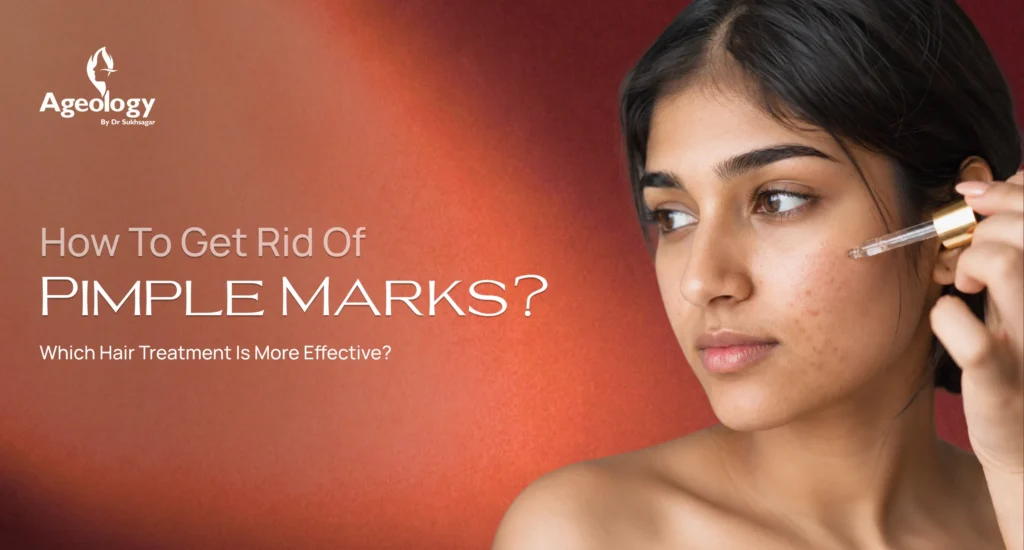
A breakout is difficult to deal with while it’s happening. What’s worse, honestly, is the dark patch or reddish spot it often leaves behind long after the pimple itself is gone. For many people, these lingering blemishes affect both skin clarity and confidence far longer than the actual acne ever did.
The moment you start searching for how to get rid of pimple marks, you run into a flood of contradictory advice online, home remedies, viral hacks, and five-step routines promising overnight results. But safe and effective pimple mark removal is based on something less flashy: understanding what’s happening in your skin, then applying strategies that are backed by real clinical evidence.
At Ageology, under the medical direction of Dr Sukhsagar Ratol, a board-certified aesthetic practitioner and expert dermatologist, skin healing is approached through precision dermatology, not guesswork. Below is a practical, evidence-based guide covering how to remove pimple marks, with ten tips worth actually following.
10 Expert Tips for Pimple Marks Removal
- Never Pick, Squeeze, or Pop Active Pimples
This is the one rule that matters more than almost anything else. Squeezing a pimple pushes bacteria, pus, and inflammatory debris deeper into the surrounding tissue. That deeper injury forces melanocytes to overproduce pigment defensively, and the mark that results ends up darker and longer-lasting than it would’ve been if the pimple had been left untouched.
- Apply Broad-Spectrum Sunscreen (SPF 30+) Daily
UV exposure is arguably the single biggest thing that turns a faint mark into a stubborn one. Sunlight triggers melanin synthesis in healing skin, deepening pigmentation that might otherwise have faded on its own. A broad-spectrum, non-comedogenic SPF 30 Sunscreen belongs in your morning routine every single day, even on cloudy days and days when you’re going to be indoors the entire time.
- Add Topical Vitamin C to Your Morning Routine
Vitamin C works by inhibiting tyrosinase, the enzyme responsible for melanin production. When used consistently, a stabilised vitamin C serum neutralises free radicals, brightens overall tone, and speeds up the fading of brown and purple post-acne marks.
- Bring in Medical-Grade Niacinamide (Vitamin B3)
Niacinamide earns its reputation as a multitasker. Rather than just blocking pigment production, it interrupts the transfer of melanosomes from melanocytes to the surface skin cells that would otherwise display them. It also reinforces the skin barrier, calms lingering redness, and helps regulate oil production so future breakouts are less likely.
- Introduce Topical Retinoids for Faster Cell Turnover
Retinoids like tretinoin, adapalene, and retinol are the most effective option dermatology has for this purpose. They speed up cell turnover, helping pigmented surface cells shed faster while encouraging fresh, more evenly toned skin underneath. Used consistently at night, these noticeably smooth textures accelerate how quickly marks fade. It is, however, important to note that retinoids in excess amounts may be harmful if used without the opinion or advice of a professional.
- Exfoliate Safely with AHAs
Skip the gritty physical scrubs, as they tend to create micro-tears that make inflammation and pigmentation worse, not better. Chemical exfoliants like glycolic or lactic acid work differently, gently dissolving the bonds holding dead, pigmented cells to the surface, revealing lighter skin beneath without the physical trauma.
- Use Salicylic Acid (BHA) for Dual-Action Relief
If you’re dealing with active breakouts and old marks at the same time, salicylic acid is worth prioritising. Being oil-soluble, it penetrates into pores to clear out trapped sebum and dead cells, calming active inflammation while offering mild exfoliation that helps existing marks fade.
- Skip the Aggressive Kitchen Remedies
Raw lemon juice, undiluted apple cider vinegar, and baking soda scrubs, these show up constantly in DIY advice, and they tend to do far more harm than good. They throw off your skin’s natural pH, leading to irritation, contact dermatitis, and often a fresh round of post-inflammatory pigmentation that may just be worse than what you started with.
- Keep Skin Hydrated with Barrier-Supporting Ingredients
Dehydrated skin simply heals more slowly. When the barrier is compromised, inflammation stays active longer, and marks stick around longer as a result. A lightweight, oil-free moisturiser with ceramides, hyaluronic acid, or centella asiatica can help support the healing process without clogging pores.
- Consider Professional Dermatological Treatment
Once at-home skincare has done what it can, in-clinic treatment is often the fastest route to real, visible improvement. Procedures performed under medical supervision reach deeper into the skin than any topical product can, delivering concentrated actives or controlled energy exactly where it’s needed.
Clinical Solutions at Ageology for Fast, Lasting Results for Pimple Marks
If your goal is figuring out how to remove pimple marks permanently rather than just temporarily fading them, in-clinic protocols designed by Dr Sukhsagar Ratol at Ageology offer a far more targeted path:
- Medical chemical peels: Formulated with higher-strength glycolic, lactic, or salicylic acid, these lift stubborn pigment evenly across the treated area.
- Advanced laser resurfacing and photofacials: These specialised light-based treatments target pigment or residual redness directly, breaking down discolouration with minimal downtime.
- Morpheus8 and microneedling therapies: For skin dealing with both discolouration and mild textural irregularities, combining microneedling with radiofrequency stimulates collagen production from deep within the dermis.
The Bottom Line
If you are wondering, “How can I remove pimple marks and actually see results?”, the honest answer is that it takes a combination of consistent daily skincare, real sun protection, and a bit of patience while science-backed actives do their work. Marks don’t disappear overnight, but modern aesthetic dermatology gives you legitimate, well-tested ways to speed that process along and clear post-acne discolouration for good.
Don’t let old breakout marks keep your skin looking dull and tired.
Book a personalised assessment at Ageology with Dr Sukhsagar Ratol and start working towards a clearer, more even, and more confident complexion.
Medical Disclaimer: The information provided in this blog is intended solely for educational and informational purposes and does not constitute professional medical advice, diagnosis, or treatment. Always seek the advice of a qualified healthcare provider or dermatologist with any questions you may have regarding a medical condition or skin concern.
Frequently Asked Questions
- How to get rid of pimple marks fast?
The quickest, safest route combines in-clinic procedures, medical chemical peels, Q-switched laser therapy, or photofacials, with a consistent home routine built around broad-spectrum sunscreen, vitamin C, and topical retinoids.
- Can you 100% remove acne scars?
Complete removal back to untouched skin is uncommon for deep structural scars, but advanced dermatology can improve depth, texture, and visibility by 70–90%. The realistic goal is blending scar tissue seamlessly into surrounding skin, not erasing it entirely.
- Do pimple marks fade away on their own?
Yes. Because post-inflammatory pigmentation sits at the surface, it naturally fades as skin cells turn over. Sun protection and brightening actives simply speed that process up considerably.
- What causes dark spots from pimples?
Inflammation from an active breakout triggers melanocytes to produce extra melanin as a protective response. Once the pimple heals, the excess pigment stays trapped in the upper skin layers, forming a flat discoloured spot.
- Can toothpaste remove acne scars?
No, dermatologists actively warn against this practice. Toothpaste often contains baking soda, hydrogen peroxide, and menthol, all of which can irritate skin, cause chemical burns, and worsen pigmentation rather than fade it.